Insights from the frontline: A survey of Dutch CrossFit ® coaches and affiliate owners
Farran Mackay · 6 April 2023 · 9 min read
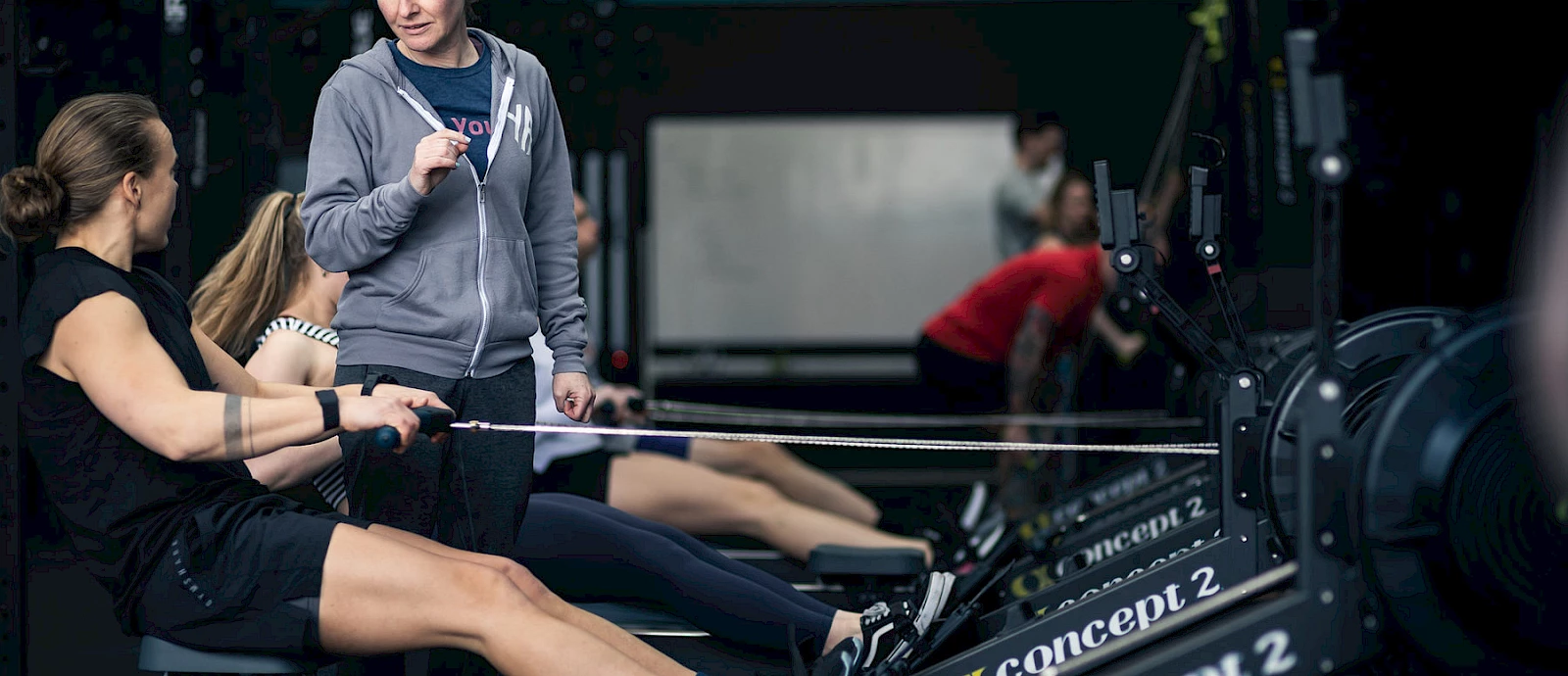
In the month of March 2023, we conducted a survey specifically targeted at CrossFit ® coaches and affiliate owners in the Netherlands. We asked them, amongst other things, about why they coach, what qualities they believe a CrossFit ® coach should have, and about the biggest challenges they face as coaches. In total 189 respondents filled out the survey in full.
This is not a peer reviewed validated published research article, it is simply the story of those who responded.
Who respondedFirst of all, to help us have a bit of context to the results, let's take a look at who responded.
1) Nearly three quarters were aged between 25 and 39, and no one older than 59 responded.
Age2) Just over 40% have been coaching for 3 years or less, and over 10% have been coaching for over 10 years!
Years of coaching CrossFit ®3) Nearly a third of respondents coach CrossFit ® for 20 or more hours a week in either a group or 1-on-1 setting.
Current hours of coaching CrossFit ® per week4) And out of the 98% of the respondents who described their role as being a trainer and/or head coach, over 50% have at least one additional role within the CrossFit ® ecosystem. The distribution of the additional role(s) is as follows:
Additional roles 5) Just over 35% of the respondents continued on after the CF-L1 to gain the CF-L2 or higher and over 50% have completed a CrossFit ® online and/or preferred course. 15% of respondents also specifically mentioned other courses/qualifications such as Core Academy (PowerMama), ALO (Academy of Physical Education), Eerstegraads docent LO (qualified teacher of physical education), and Fitnesstrainer A/B.
Highest CrossFit ® qualificationNote: in the pie chart above, 1.6% of respondents have a CF-L3 or CF-L4 qualification.
Now that we have some idea about who responded, let's have a look at the reasons they said they coach CrossFit.
Why CrossFIt ® coaches coachFor those of you who are involved in the CrossFit ® ecosystem, you will not be surprised that over 40% of respondents said they coach to share their passion of the sport. Also equally unsurprising is that over 40% or respondents said they coach to help people (in one way or another).
Interestingly enough, only around a third of respondents included their own "enjoyment" and/or "self development" as a reason to why they coach. Now this is not to say that the other respondents either don't enjoy coaching or the opportunity for personal growth, but it does indicate that the benefits of being a coach on their own lives either is not recognised or it is not perceived as a motivator.
And then we come to the topic that a lot of people find uncomfortable, financial benefits. Although nearly 60% of respondents said that their role(s) within the CrossFit ® ecosystem was their only source of income, only 3% included financial benefit (whether it was income or free training) as one of their reasons why they coached. In fact one respondent replied with "I actually left a better paying job to coach".
The responses for the qualities a CrossFit coach should have were a bit more diverse.
Qualities needed by a CrossFit coachOne thing is clear, the majority of respondents believe that a CrossFit ® coach needs to have empathy (including patience). As one respondent put it "empathy and genuine care".
A positive presence & attitude was also an important quality for coaches to have and included comments related to being able to connect with the participants, creating a safe atmosphere, and also of note is that coaches should have "no ego".
Similar to other teaching professions where the first few years are more focused on knowledge and group management, as coaches gain more years of experience they are more likely to only list qualities such as empathy and presence & attitude rather than qualities related to the practicalities of coaching such as teaching, seeing & correcting, and group management.
Qualities that were also mentioned were curiosity (to learn), open for feedback, professionalism, role model, and the "love for the sport and the profession".
It is clear, as one respondent put it, that coaching CrossFit ® requires "more than only demonstrating the movement".
This will come of no surprise to anyone who has coached more than one CrossFit ® class. It is one of the unique selling points of the CrossFit ® methodology, but it is also the biggest challenge for coaches...having participants of different abilities in their class (26%) and giving all participants the appropriate attention (28%).
In fact if we take a step back, over 50% of respondents cite one or more aspects of coaching a participant as a big challenge to CrossFit ® coaches. Other challenges include dealing with "stubborn" or "uncoachable" participants (7%) as well as maintaining the motivation of and/or finding the right challenge for more intermediate and advanced participants (10%).
Probably of some concern for the profession as a whole is that 12% or respondents listed "earning enough" as a big challenge.
Other aspects that respondents listed included "coaching too much", the social and psychological aspects of coaching others, and balancing part-time coaching with another job as challenging.
Finally we will have to give an honorary mention to the challenge of selecting the "right" music for a training...and by "right" one respondent specifically refers to "so no one complains about it". Recognisable?
And finally let us have a look at how coaches stay up-to-date with the CrossFit ® methodology.
Sources CrossFit coaches useNearly half of all respondents reported using material provided by CrossFit HQ. Of those respondents 64% listed the main site (crossfit.com), 48% listed one of the newsletters (e.g. email of the day, affiliate newsletter), and 15% CrossFit Benelux.
Unsurprisingly social media (e.g. Instagram, YouTube) was also a very popular choice (46%) for staying up-to-date with new developments. In addition10% of respondents listing the internet in general as their source of information, and 4% listed podcasts.
Interestingly only 14% or respondents listed courses and only 9% talking to other coaches as a way they keep up to date. It should also be noted that 6% of respondents report they do not keep up-to-date with developments within CrossFit.
Based on the results of the survey we will discuss three aspects that require attention within the Dutch CrossFit ® ecosystem:
Specifically based on the challenges reported by coaches, a number of topics should be considered in the (continued) professional development of CrossFit ® coaches in the Netherlands, and possibly in other countries, both within affiliates themselves, and within the larger ecosystem.
What is clear from the results from the survey is that coaches find the coaching of different abilities within a lesson and giving all participants the appropriate attention is challenging. In the "formal education world" this is known as differentiation. Essentially it is what is considered as scaling in CrossFit but also with an eye on the development goals of the participant, and as such how much support (including interaction) a participant may need from the coach. For more information about differentiation in the CrossFit ® context read here.
Although scaling is dealt with in both the CF-L1 and CF-L2 courses, as well as there being a dedicated online course, coaches need to be actively supported in developing their knowledge of practical techniques/strategies that can be used in a CrossFit ® lesson to implement not just scaling but also differentiation. In turn coaches need to plan their lessons to take these techniques/strategies into account and then put their theoretical knowledge into practice "in the real world" (but more on that later).
Alongside the 6 criteria taught in the CF-L2 (teaching, seeing, correcting, demonstrating, group management, presence & attitude), coaches need to be supported in nurturing their empathy and developing their understanding of people.
Nurturing empathy in CrossFit ® coaches involves fostering emotional intelligence, active listening skills, and promoting a supportive environment for the coaches to operate in. But be warned...people can usually sense when empathy is not authentic, which can lead to mistrust, damaged relationships, or reduced effectiveness in roles that require genuine connections, such as coaching. Instead of faking empathy, it's more beneficial to work on nurturing true empathetic skills.
However nurturing empathy should not be done without supporting coaches to also recognise, and most importantly defend, their emotional boundaries in order to maintain a healthy work-life balance, and prevent burnout.
Coaches can benefit from having a basic understanding of psychology to better understand and connect with participants (including the "stubborn" and "uncoachable" ones!), to motivate them, and support their overall well-being. Some key areas of psychology that should be considered are motivation, learning (both cognitive and motor skills), stress and anxiety management, self-efficay and self-confdence, mental toughness and resilience, and group dynamics. By being aware of, and being capable of incorporating psychological principles into their coaching practice, CrossFit ® coaches can better understand their members' needs, create supportive environments, and enhance overall training experiences.
Supporting coaches in translating theory (e.g. differentiation, psychology) into practice is essential for enhancing their coaching skills and creating more effective training experiences for the participants. Providing (and seeking) opportunities for ongoing education, mentorship, and hands-on experience can help bridge the gap between theoretical knowledge and real-world application.
Encourage coaches to attend workshops, seminars, and online courses to deepen their understanding of CrossFit ® methodologies, exercise science, and psychology. Encourage coaches to take the steps they need to apply this "new" knowledge to their coaching practice (for some tips read here).
Pairing coaches with experienced mentors can also facilitate the sharing of valuable insights and guidance in implementing the learned concepts. Additionally, creating a supportive and collaborative environment where coaches can openly discuss their challenges, experiment with new techniques, receive actionable and constructive feedback, and learn from each other's experiences will empower them to confidently apply their theoretical knowledge to their coaching practice, ultimately leading to improved member outcomes and overall coaching effectiveness.
With nearly 50% of respondents using social media as a source, it is clear that there is a broader knowledge base than CrossFit HQ and courses that coaches find appealing. For over 85% of these respondents, while social media is seen as a valuable resource for staying current with CrossFit ® developments, it is not their only source. However it is unclear whether respondents approach the information on social media critically and supplement it with other reliable sources, such as reputable websites and journals, to ensure a well-rounded understanding of the profession.