
What Coaches Think Is Normal Can Be a Barrier for New Members
Farran Mackay · 25 June 2026 · 4 min read
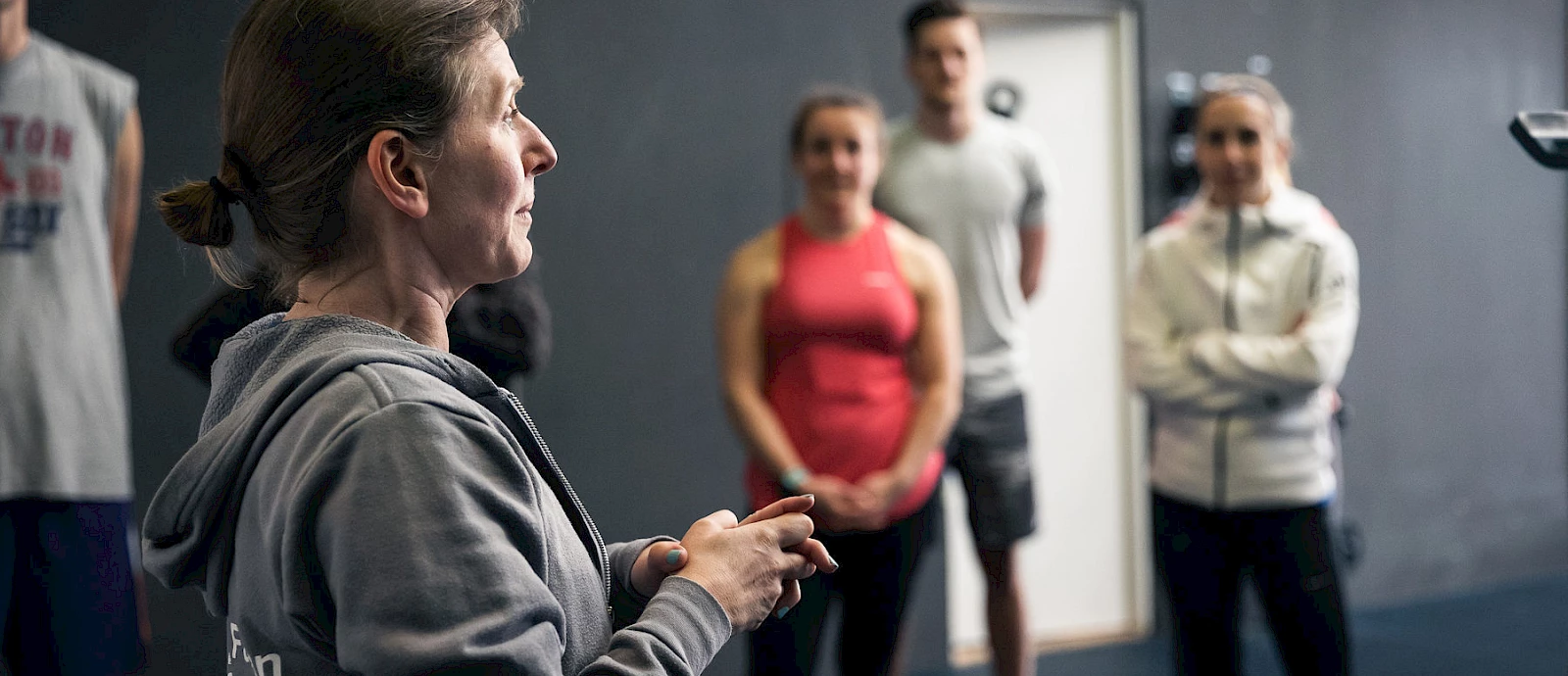
A coach explains the workout. Everyone nods.
The coach assumes the explanation was clear because nobody asked questions.
Later, a newer member admits to another member they understood almost none of it. They did not know what an AMRAP was. They were not sure what Rx meant. They had no idea what was meant by "the intended stimulus". They just did not want to be the person who stopped the class to ask.
The coach leaves the session thinking communication was clear.
The member leaves wondering whether they belong.
Neither person is trying to create a problem. In fact, both experiences make complete sense from their own perspective.
The challenge is that coaches and members often experience the exact same environment very differently.
One of the challenges of becoming more experienced as a coach is that it becomes harder to remember what it felt like not to know something.
Terms like AMRAP, Rx, touch-and-go, scaling, and stimulus become part of everyday language. The flow of a class becomes familiar. Choosing weights, setting up equipment, finding a partner, and navigating the social dynamics of a gym all become second nature.
After enough time, it is easy to forget that none of these things are actually normal.
Every experienced coach was once the person who did not know where to stand, what equipment to collect, or whether they were allowed to ask questions during the whiteboard brief. The difference is that those experiences often fade into the background as confidence and familiarity grow.
The problem is not that coaches stop caring. The problem is that familiarity creates blind spots.
A coaching blind spot occurs when a coach's experience and familiarity make it difficult to recognise challenges that are obvious to newer members. These blind spots often develop because skills, routines, language, and social norms that were once unfamiliar have become automatic over time.
What feels normal to a coach can become a barrier for a member because coaches often forget how much of the gym environment has been learned over time. Great coaching requires recognising these blind spots and understanding that members may experience the same class very differently.
Many of the barriers that influence member experience are not physical barriers.
They are social, emotional, and informational.
Consider a member arriving a few minutes before class. From a coach's perspective, they are simply standing quietly at the edge of the room waiting for things to begin.
From the member's perspective, they may be trying to figure out where to put their bag, whether they need to sign in, who the coach is, whether they should start warming up, and whether they are even in the right place.
For the coach, it is a routine part of the day.
For the member, it may be the most stressful moment of the day.
Neither person is intentionally creating that gap, but the gap still exists.
One of the most important shifts a coach can make is recognising that a member's experience does not become less real simply because it was not intended.
But those responses focus on our perspective rather than theirs.
Members do not experience your gym through your intentions. They experience it through what they understand, notice, and feel capable of navigating. What feels insignificant to a coach can feel overwhelming to a member, and that experience is valid regardless of whether the coach recognises it.
This does not mean every concern needs to be solved immediately or that coaches should remove every challenge from the environment.
It simply means that understanding must come before judgement.
If a member feels intimidated, confused, embarrassed, or uncertain, that experience is real to them. Dismissing it because it does not match our own experience does not make it disappear.
It simply makes it harder for us to understand what they are going through.
One of the clearest examples of this appears during partner workouts.
Immediately, experienced members start pairing up. Conversations continue. Equipment gets organised. The room moves smoothly into the next part of class.
From the coach's perspective, everything is working exactly as expected.
Meanwhile, a newer member may be standing there wondering who to approach, whether they are holding anyone up, or whether everyone else already has a partner.
Moments like these happen every day in coaching environments. Most of them are small. Many pass unnoticed. Yet they often have a disproportionate impact on how welcomed, supported, and confident members feel.
The goal is not to eliminate every potential barrier.
The goal is to become better at seeing them.
The more aware we become of the things that feel normal to us, the easier it becomes to recognise the experiences others may be having.
In your next class, pick one part of the experience that feels completely routine to you.
It might be the whiteboard brief, choosing weights, finding a partner, understanding the workout description, or navigating the gym before class starts.
Now imagine experiencing it for the first time.
What assumptions are you making about what members know, understand, or feel comfortable doing?