2026 Report on the CrossFit® Ecosystem – What Coaches & Owners Are Really Saying
Farran Mackay · 7 May 2026 · 7 min read
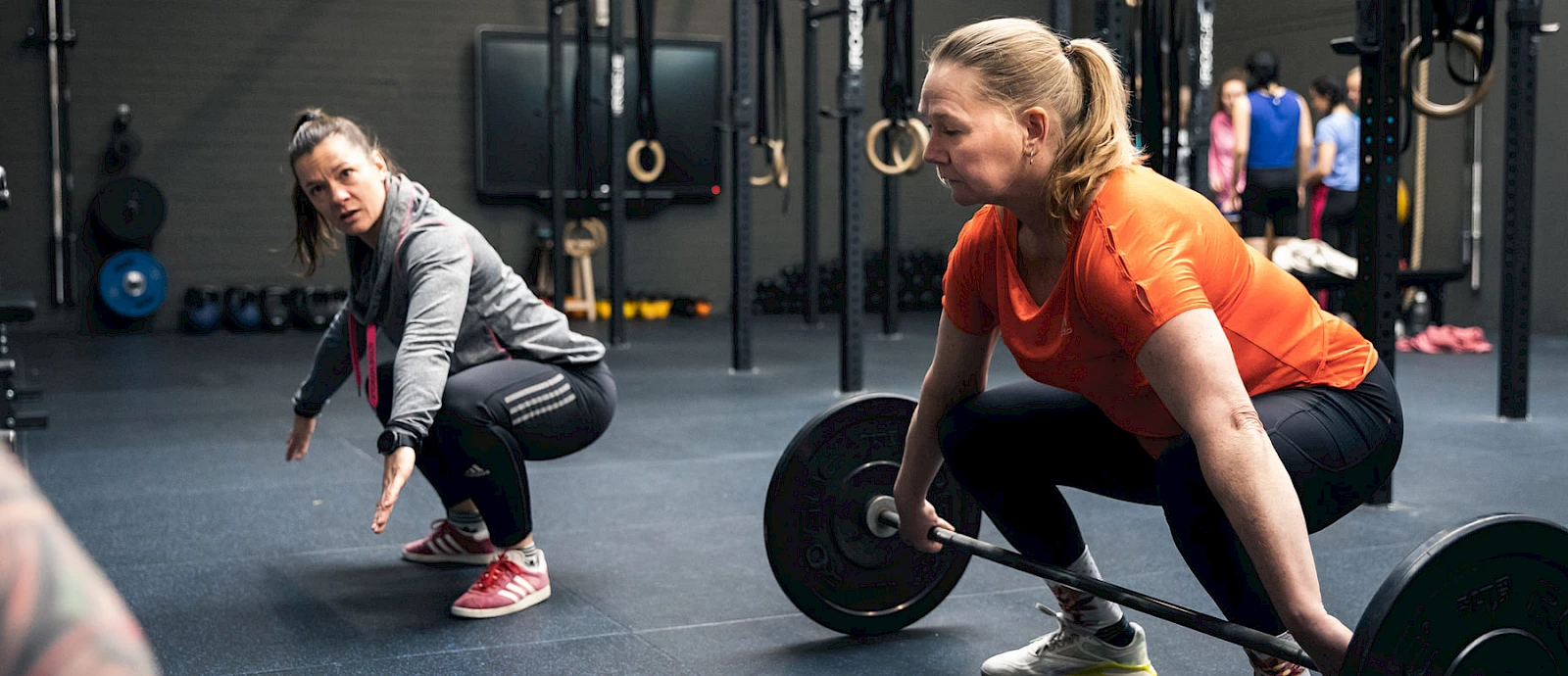
Coaching has long been positioned as one of the defining features of the CrossFit® experience.
It is what separates the affiliate model from "access-based" fitness. It is where relationships are built, where standards are upheld, where people are guided through challenge, and where fitness and health become something more personal than simply following a program.
As the ecosystem has matured, expectations around coaching have also evolved. Coaches are increasingly expected to manage group dynamics, support behaviour change, communicate effectively, continue developing professionally, and create meaningful experiences for members with very different needs and backgrounds.
At the same time, questions continue to emerge around whether the structures surrounding coaching have evolved at the same pace.
The 2026 CrossFit® Ecosystem Survey was created to better understand the realities of working within that environment today. The survey was conducted independently and is not affiliated with or endorsed by CrossFit® LLC.
This year, 1083 coaches and affiliate owners from across the world shared their experiences, perspectives, challenges, and reflections on what it currently means to work within the CrossFit® ecosystem.
While experiences differ significantly depending on affiliate, role, and location, several consistent themes emerged throughout the responses. Questions around sustainability, compensation, professional value, leadership, and long-term viability appeared repeatedly across different regions and contexts.
What also became increasingly visible throughout the responses was the degree to which passion, purpose, and personal investment continue to hold many parts of the ecosystem together. In many cases, respondents describe a deep sense of meaning attached to the work itself, even while simultaneously questioning whether the structures surrounding that work are fully supporting it long term.
This report is not intended to criticise any one group within the ecosystem. Rather, it aims to create greater awareness around the realities many coaches and owners are currently navigating, while encouraging broader reflection around what may be needed to support coaching as a sustainable profession moving forward.
The responses reflect a broad mix of 1083 coaches and affiliate owners working across the CrossFit® ecosystem today.
Geographically, responses come from across Europe, the UK, the US, and a range of other regions. While there is a clear skew towards English-speaking countries or environments where English is commonly used, the dataset still reflects a broad international mix. Despite differences in local context, many of the themes that emerge are consistent across locations.
Most respondents are actively coaching, with over half identifying as coaches only. Around a quarter combine coaching with ownership, and a smaller group are affiliate owners not regularly coaching. That mix matters, because many are not just coaching classes. They are also managing people, running businesses, and trying to make it all work together.
In terms of experience and qualifications, this is not a beginner sample. The majority hold a CF-L2 or higher. There are newer coaches in the mix, but overall these responses come from people who have spent time in the ecosystem and understand its realities.
The age distribution leans towards 35–44, with most respondents falling between 25 and 54. This is not a student or early-career group. These are people balancing coaching with careers, families, and other responsibilities, which shapes how they experience the work.
Gender-wise, the group is still male-dominated, but with a strong and visible number of female coaches and owners contributing.
This isn’t a perfectly controlled dataset, and it’s not meant to be. What it offers instead is a real-world snapshot of how coaching and ownership are experienced across the ecosystem right now (click on the arrow to see more charts).
The Big PictureAcross responses, a few patterns show up again and again.
Coaching is meaningful work. People care deeply about what they do. They take pride in helping others improve, in building relationships, and in being part of something that goes beyond just a workout.
At the same time, there is a consistent tension underneath that.
Many respondents describe coaching as highly impactful work, yet also question whether the structures surrounding it consistently reflect the level of responsibility, professionalism, and emotional investment involved.
Many are not able to rely on coaching as their primary source of income. The numbers, on the surface, can sometimes look reasonable. But when broader responsibilities, inconsistent structures, self-employment costs, and long-term sustainability are considered together, the picture becomes more complicated.
And while some coaches and owners describe strong, supportive environments with clear development pathways and leadership, others report the opposite. A lack of structure, limited progression opportunities, inconsistent expectations, and uncertainty around what long-term coaching development is supposed to look like within the ecosystem.
What also becomes increasingly visible throughout the responses is the role passion continues to play in sustaining the ecosystem itself.
Many coaches and owners continue investing significant time, emotional energy, and personal commitment into the work because they care deeply about the impact it has on people’s lives. In some cases, that passion appears to be compensating for structures that may not otherwise feel sustainable on their own.
Put simply, the picture that emerges is this:
Coaching is widely positioned as central to the CrossFit® experience. But it is not always structured, priced, developed, or supported in ways that consistently reflect that reality long term.
That gap shows up in different ways, and in the sections that follow, we’ll look at where it becomes most visible.
One of the clearest themes throughout the responses is the tension between the importance of coaching within the CrossFit® ecosystem and the reality of sustaining it long term as work.
Many respondents describe coaching as deeply meaningful. They speak about connection, impact, purpose, and helping people change their lives. At the same time, there is a recurring uncertainty around whether the role itself is realistically sustainable over time.
For some, the challenge is financial. For others, it is the accumulation of hours, emotional energy, inconsistent schedules, or the difficulty of balancing coaching alongside other work and life responsibilities. In many cases, it is a combination of all of those factors.
A number of coaches describe needing multiple jobs or additional income streams to make things work financially. Others describe reducing coaching hours, stepping away from full-time coaching ambitions, or reconsidering their long-term future within the ecosystem entirely.
Alongside this sits a broader uncertainty around professional progression. Many respondents describe continued investment into courses, certifications, mentoring, and years of experience, but without a clear sense of how that investment translates into long-term career development, financial stability, or future opportunity within the ecosystem.
This becomes particularly relevant when coaching is consistently positioned as central to the CrossFit® experience itself. If coaching is the primary differentiator from access-based fitness models, questions naturally emerge around what is required to make coaching sustainable not just in the short term, but as a profession people can realistically remain in over time.
Affiliate owners describe a different side of the same challenge. Many speak about trying to balance rising costs, member expectations, coach compensation, and the realities of running a business. Several responses reflect a desire to better support and develop coaches, while also acknowledging the financial limitations many affiliates operate within.
The responses suggest that sustainability within the ecosystem is currently relying heavily on the willingness of coaches and owners to continue investing beyond what the structure itself consistently supports.
What emerges is not simply dissatisfaction with coaching as a role, but a broader question around whether the current structures within the ecosystem consistently support the level of professionalism, responsibility, and long-term investment that coaching increasingly requires.
Despite these challenges, there are also responses that describe environments where coaching does feel sustainable. In most cases, this appears connected to a combination of clear structure, supportive leadership, professional development opportunities, and compensation that more closely reflects the level of responsibility involved.
These responses matter because they suggest the issue is not whether sustainable coaching environments can exist, but how consistently they currently do.
Taken together, the responses point toward a growing tension within the ecosystem. Coaching is widely positioned as central to the CrossFit® experience, yet many of the people delivering that experience continue to describe uncertainty around whether the role itself is being structured and supported in a way that allows it to remain sustainable long term.
When people talk about pay, the numbers on the surface do not always look unreasonable.